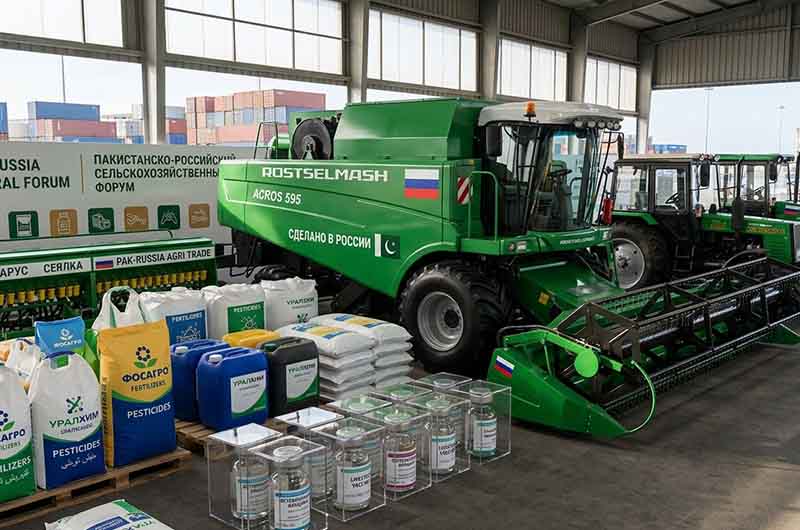
Pakistan and Russia are actively exploring a significant expansion in agricultural trade, aiming to supply modern farm machinery, fertilizers, pesticides, and livestock vaccines as the two nations accelerate efforts to deepen bilateral economic cooperation.
The initiative comes as Islamabad seeks a long-term, multidimensional partnership with Moscow, gradually broadening ties across trade, energy, agriculture, and regional diplomacy following decades of limited engagement.
Key Areas of Bilateral Agricultural Collaboration
- Modern Mechanization & Input Supplies: Russian companies and institutions are preparing to supply advanced farm machinery, fertilizers, and pesticides to help Pakistan counter high input costs, modernize its farming sector, and raise overall crop yields.
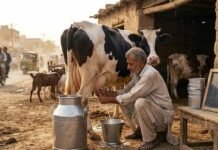
- Livestock & Animal Health: Both sides are targeting expanded cooperation in veterinary vaccines, animal health products, and modern livestock management technologies.
- Technology Transfer & Joint Planning: Moscow expressed readiness to identify Pakistan’s specific agricultural needs, establish dedicated cooperation mechanisms, and provide technical expertise and technology transfer to boost farm efficiency.
Strategic Impact & Broadening Partnership
Speaking during bilateral discussions, Pakistan’s Minister for National Food Security, Rana Tanveer Hussain, stressed that enhanced access to Russian agricultural inputs and mechanization is vital for reinforcing Pakistan’s long-term food security goals and improving farm profitability. Russian Economic Development Ministry representative Nikita Buzanov highlighted that modern equipment and inputs will play a crucial role in lowering production costs and boosting output across Pakistan’s agricultural landscape.
The agricultural talks align with a wider diplomatic and economic push between the two nations, following high-level engagements between Pakistan’s Foreign Minister Ishaq Dar and Russian Foreign Minister Sergey Lavrov in July. Building on momentum that began with Pakistan’s importation of discounted Russian crude oil in 2023, both governments continue to scale up joint ventures spanning energy, connectivity, industry, and trade.