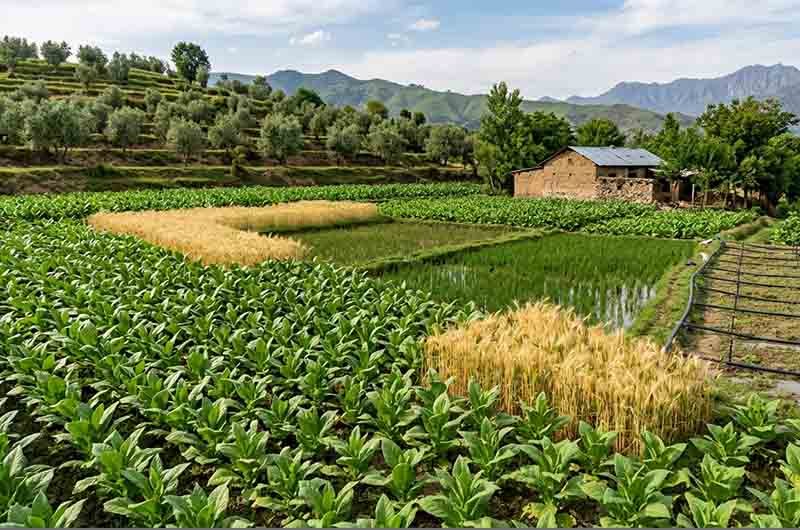
The Senate Standing Committee on National Food Security & Research has recommended formally declaring tobacco an agricultural crop to better protect the economic interests of local farmers.
The meeting, chaired by Senator Syed Masroor Ahsan, addressed critical national agricultural issues ranging from crop statuses and seed quality to livestock health and olive production.
Tobacco Status & Farmer Welfare Following a briefing by the Pakistan Tobacco Board (PTB) on current regulatory frameworks, Senator Aimal Wali Khan advocated reclassifying tobacco from a commodity to an agricultural crop. The panel formed a dedicated sub-committee to explore policy changes and resolve issues surrounding unsold tobacco stocks in Khyber Pakhtunkhwa.
Grain Yields and Fertilizer Subsidies The Ministry of National Food Security briefed members on wheat and rice yield fluctuations. While wheat production recovered in 2026 after a dip in 2024, officials emphasized that yield stability relies heavily on DAP fertilizer availability—half of which is imported from Saudi Arabia. The ministry highlighted structural challenges, including:
- Widespread use of uncertified seeds
- Inadequate fertilizer usage and high costs compared to subsidized regional competitors like India and China
- Severe climate change impacts
- Devolution of 90% of agricultural responsibilities to provincial governments
To address these gaps, the government is rolling out seed quality controls, expanding bank credit access, and facilitating modern machinery for growers.
Livestock Vaccine Regulatory Concerns The committee raised strong concerns over cattle vaccination standards after Senator Aimal Wali Khan noted that livestock vaccinated with the VRI vaccine still contracted Haemorrhagic Septicaemia (HS). The panel discovered that despite official directives issued in 2020, the vaccine continues to be distributed nationwide without mandatory DRAP licensing.
Olive Production Milestones & Edible Oil Imports On a positive note, the ministry highlighted major strides in domestic olive farming. Pakistan is now a permanent member of the International Olive Council, with Balochistan leading national output and four international quality awards under its belt. The committee pledged support for drip irrigation expansion and local nursery development to boost export potential.
Concurrently, the chairperson raised alarms over Pakistan’s high palm oil import bill, urging stricter oversight of local ghee and vegetable oil markets to prevent monopolies and protect consumers.