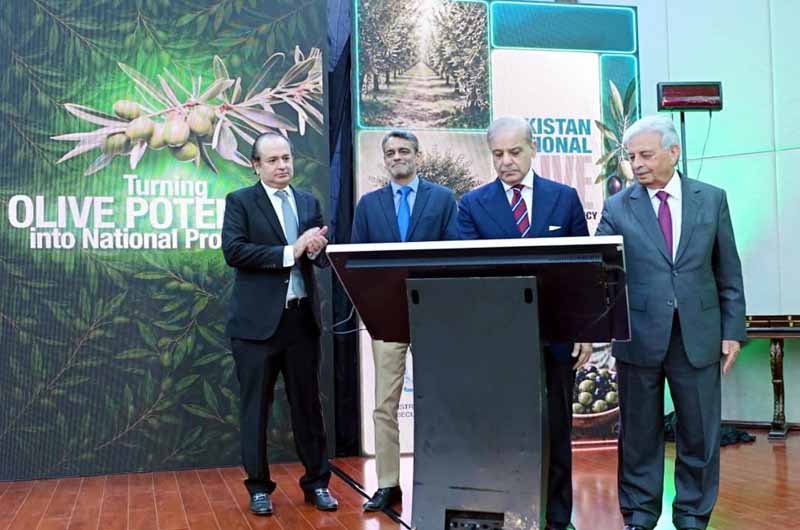
Pakistan has taken a major stride toward agricultural self-reliance with the official launch of the National Olive Value Chain Policy by Prime Minister Muhammad Shehbaz Sharif. Aimed at curbing the nation’s colossal $4 billion annual edible oil import bill, the strategy shifts the domestic olive sector from basic cultivation to a fully integrated ecosystem spanning processing, branding, quality control, and international export.
Key Policy & Growth Highlights
- Edible Oil Savings: Expanding domestic olive, palm, and sunflower production aims to dramatically offset high foreign exchange expenditures on crude edible oil imports.
- Massive Sector Expansion: Olive tree coverage in Pakistan has surged from 500,000 in 2016 to over 7 million today, spanning approximately 60,000 acres across Punjab, Khyber Pakhtunkhwa, Balochistan, and Sindh.
- Youth & Capacity Building: The government will fund advanced training in Italy for 100 young agriculture graduates, focusing on modern cultivation, processing, and marketing techniques.
- Global Footprint: Pakistan recently secured a permanent seat at the International Olive Council (IOC) during its 123rd session in Portugal and established its first Olive Sensory Evaluation Lab in Islamabad.
Decade-Long International Collaboration: The Italian Partnership
The initiative highlights over seven decades of bilateral cooperation between Pakistan and Italy, supported notably by the €20 million Professional Capacity Building and Extension Agriculture Programme.
- Phytosanitary & Technical Upgrades: Italian technical assistance helped set up sensor and pathology laboratories, establish seven certified nurseries, and train local agricultural specialists.
- Socio-Economic Empowerment: The joint initiative has facilitated 36 business development groups, with a strong focus on empowering women and young entrepreneurs in rural regions.
Pioneer Spotlights: Local Cultivation Milestones
| Farmer / Pioneer | Region | Key Achievement / Impact |
| Abdul Jabbar | Loralai, Balochistan | Planted orchards in 2011; produced high-grade olive oil that won international awards in New York and London. |
| Dr. Qurat-ul-Ain Irfan | Mardan, Khyber Pakhtunkhwa | Pioneering female grower who established over 14,000 olive trees following initial Italian feasibility surveys. |
| Yaqub Izhar | Nationwide | Transitioned from a non-agricultural background to build Pakistan’s largest private-sector olive nursery. |
By building direct linkages between local growers, modern infrastructure, and global markets, the new policy sets out to establish Pakistan as a competitive regional hub for olive oil production across South, Central, and Eastern Asia.