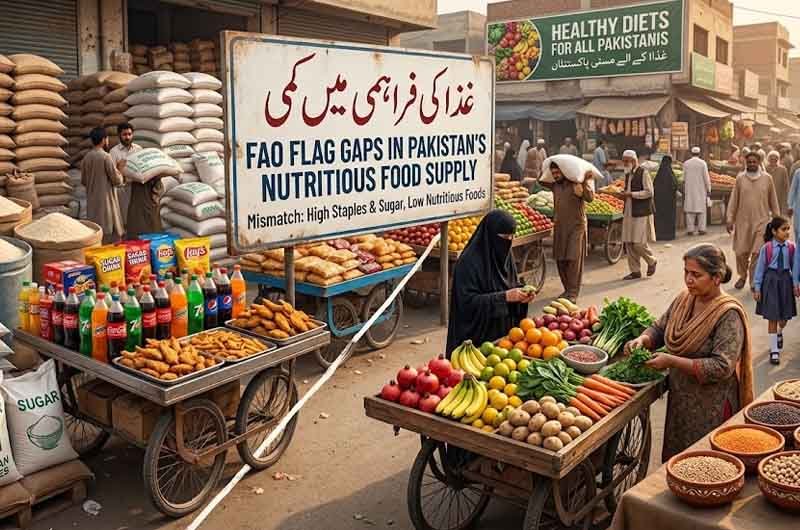
The Food and Agriculture Organisation (FAO) of the United Nations has urged Pakistan to urgently transform its agrifood system, pointing out a severe mismatch between current food production and the supply required for a healthy, balanced diet.
According to the UN agency’s latest assessment, “Food Supply for Healthy Diets in Pakistan,” over 60 percent of the population cannot afford a healthy diet. This widespread lack of access fuels double-barrelled health crises across the country—persistent undernutrition alongside rising diet-related non-communicable diseases (NCDs).
Core Findings & Supply Mismatches
The report highlights a structural imbalance in national agricultural output and consumer availability:
- Nutritious Food Deficits: Severe supply shortages exist for key food groups, including vegetables, fruits, roots, tubers, legumes, and pulses.
- Excess Supply: The availability of food staples and processed sugars significantly exceeds what is recommended by the national Food-Based Dietary Guidelines (FBDGs).
- Economic Cost: Unhealthy diets remain the primary driver of all forms of malnutrition, adding significant morbidity, mortality, and economic burdens onto society.
Recommended Policy Actions
To tackle these structural shortcomings, the FAO outlined key intervention strategies across agricultural production, fiscal policy, and consumer protection:
| Strategy Area | Priority Measures |
| Agricultural Reorientation | Shift subsidies and investment priorities toward growing fruits, vegetables, pulses, roots, tubers, and supporting regional milk production. |
| Fiscal & Regulatory Controls | Implement evidence-based taxes on sugar-sweetened beverages and foods high in salt, sugar, and unhealthy fats; enforce strict limits on marketing junk food to children. |
| Consumer Education | Update national dietary guidelines (FBDGs) and introduce front-of-pack nutrition labeling to encourage informed dietary choices. |
| Supply Chain & Infrastructure | Invest in cold storage, market infrastructure, and food safety standards to minimize post-harvest losses and encourage food reformulation. |
| Social Protection | Expand nutritious school meal initiatives and strengthen social safety nets to safeguard vulnerable populations. |
The UN agency emphasized that enabling equitable access to diverse, safe, and affordable food is a critical policy imperative necessary to fulfill Pakistan’s long-term national development goals.