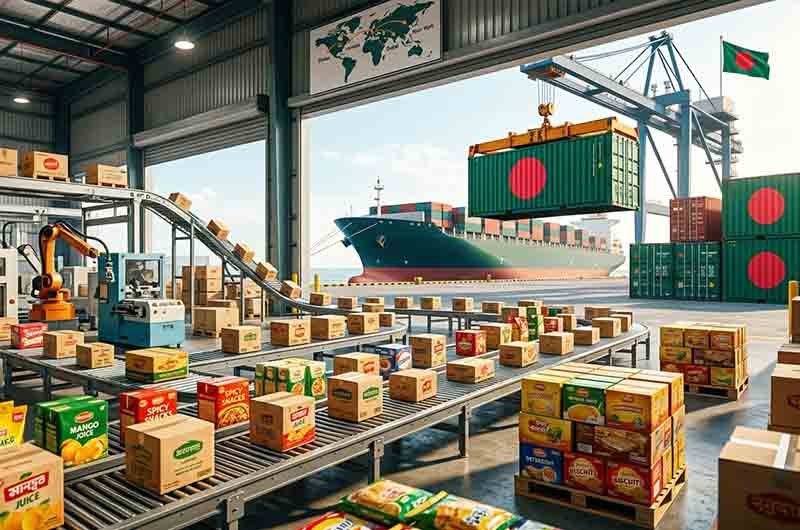
Bangladesh’s export narrative—long dominated by the ready-made garment industry—is undergoing a major transformation. Homegrown fast-moving consumer goods (FMCG) companies are increasingly expanding beyond domestic borders, pushing to turn export growth into lasting global brand recognition.
Market Drivers & Growth Targets
- Market Expansion: According to BIDA data cited by the Centre for Policy Dialogue (CPD), Bangladesh’s packaged food market is projected to reach $5.8 billion by 2030.
- Ambitious Export Goal: Food processors aim to double food exports to $2 billion.
- Packaging Sector Potential: Currently earning $2.2 billion through direct and indirect exports, the plastic and flexible packaging industry could expand to $10 billion with stronger policy and infrastructure backing.
- Global Footprint: Industry leaders like PRAN-RFL have extended their presence to around 145 countries, placing processed foods, beverages, and household goods into mainstream international retail chains.
Key Advantages and Strategic Challenges
Growth Drivers
- Scale from a strong domestic market and access to agricultural raw materials.
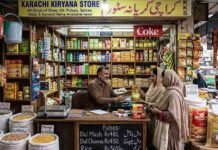
- High demand among the global South Asian diaspora serving as a gateway to mainstream consumers.
- Tailored product development and enhanced packaging standards.
Industry Hurdles
- Logistics delays, rising freight costs, and recent shipping route disruptions.
- Meeting strict international certification, food safety, and traceability standards.
- Stiff competition from established exporters like India, Vietnam, Thailand, Indonesia, and Turkey.
Moving beyond ethnic markets and securing a place on international shelves will require sustained investment, quality assurance, and brand building. Expanding the FMCG export footprint offers Bangladesh a clear path to diversify its economy and establish a recognized global identity.