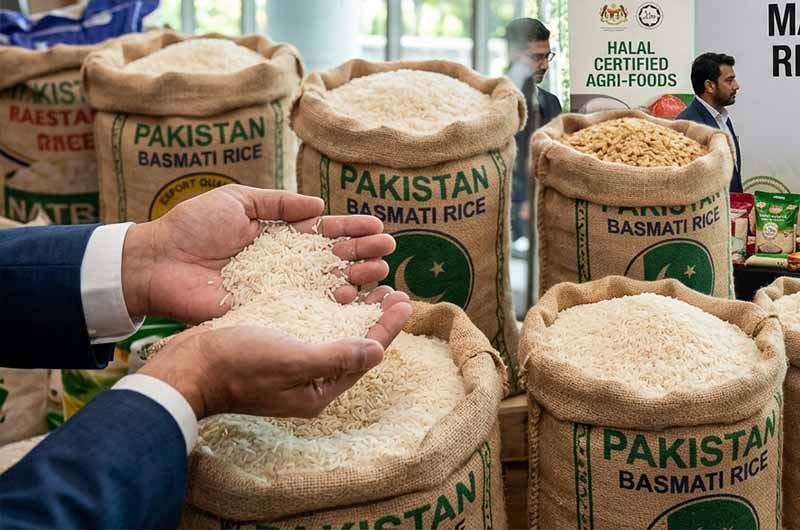
Pakistan and Malaysia have agreed to deepen bilateral cooperation across rice exports, halal certification alignment, and agricultural supply chains as Islamabad moves to secure expanded market access in Southeast Asia.
The agreement followed a series of high-level diplomatic and economic engagements in Kuala Lumpur led by Pakistan’s Federal Secretary for National Food Security and Research Amer Ali Ahmed, Federal Secretary for Commerce Jawad Paul, and High Commissioner Syed Ahsan Raza Shah.
A principal session with Dato’ Dr. Sirajuddin bin Suhaimee, Group CEO of Malaysia’s national rice agency BERNAS, focused on expanding Pakistani rice shipments while maintaining strict compliance with Malaysian quality standards. Representatives from the Rice Exporters Association of Pakistan (REAP) and the Pakistan Agricultural Research Council (PARC) participated in the talks.
“The engagements reinforce mutual commitment to expanding bilateral trade, building robust business linkages, and supporting regional food security,” official sources noted following the meetings.
Key Takeaways From the Bilateral Talks
- Halal Certification Integration: High-level discussions with Malaysia’s Department of Islamic Development (JAKIM) focused on implementing the memorandum of understanding signed with the Pakistan Halal Authority (PHA). The framework aims to streamline technical standards, simplify certification, and accelerate trade in halal-certified agricultural products.
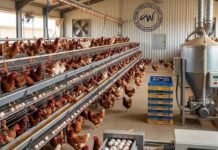
- Expanded Agri-Food Scope: Strategic discussions with Malaysia’s Ministry of Agriculture and Food Security covered meat, poultry, fisheries, aquaculture technologies, animal vaccines, biosecurity controls, and halal gelatin supply chains.
- Institutional Roadmap: Both nations agreed to establish a permanent formal mechanism for continued technical exchange, commencing with a joint virtual session scheduled for November 2026.
- Trade Platform Alignment: Pakistan reaffirmed its active participation in the Malaysia International Halal Showcase (MIHAS) to leverage Malaysia as a regional hub for its agri-food exports.