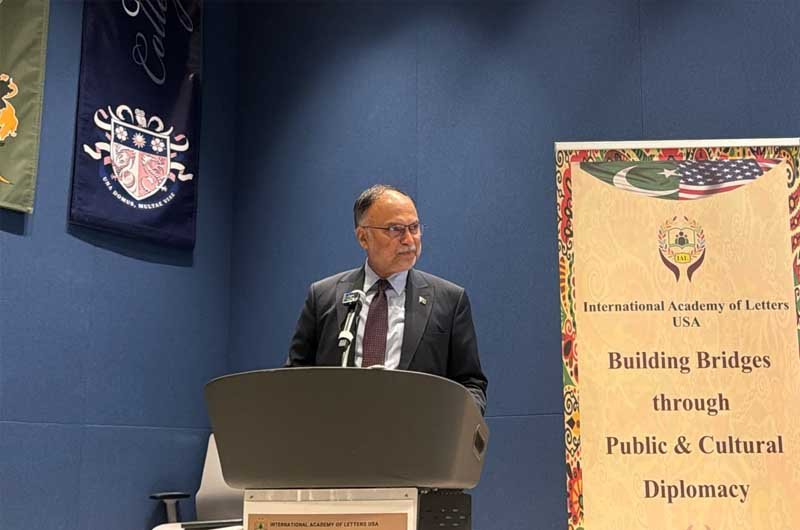
Federal Minister for Planning, Development and Special Initiatives Ahsan Iqbal emphasized that political stability, continuous economic reforms, productive investment, and an export-driven economy are crucial for sustaining Pakistan’s recovery. Presenting the September 2026 Monthly Development Update (MDU), the minister revealed that his ministry has formally requested the Prime Minister to include Planning Ministry officials alongside the Finance Ministry in upcoming IMF negotiations to ensure direct alignment on growth, inflation, and poverty reduction goals.
Industrial Recovery & Manufacturing Surge
- LSM Momentum: Large-Scale Manufacturing (LSM) expanded by 3.0% year-on-year in July FY2026–27 and surged 9.5% month-on-month compared to June 2026.
- Key Growth Sectors: Notable output gains were led by automobiles (+57.01%), transport equipment (+40.22%), tobacco (+35.82%), wearing apparel (+22.03%), electrical equipment (+7.88%), and non-metallic minerals (+4.25%).
- Price Controls: The government is targeting wholesale-retail price margins and monitoring essential commodity supplies to cushion consumers against inflationary pressures.
External Sector Resilience & FDI Inflows
- Export Expansion: Goods and services exports reached $7.3 billion during July–August FY2026–27, marking a 9.2% increase compared to $6.6 billion during the same period last year.
- Tech & Services Growth: ICT exports grew to $811 million (up from $691 million), driving total services exports up by 29%.
- Foreign Investment Surge: Net Foreign Direct Investment (FDI) rose 24% to $494 million during July–August, boosted by a 77% month-on-month jump to $316 million in August.
- Capital Market Confidence: Pakistan successfully issued a landmark $3 billion international bond, generating nearly $6 billion in total market demand.
- Current Account Deficit: The CAD narrowed by 36% to $543 million during July–August FY2026–27, supported by $7.3 billion in overseas remittances.
Political Stability & Macroeconomic Outlook
Ahsan Iqbal cautioned that political instability and street protests risk disrupting ongoing economic momentum, emphasizing that political grievances must be addressed strictly through constitutional and judicial channels. Addressing inflation—which averaged 10.2% in July–August 2026—the minister expressed confidence that falling global crude oil prices will gradually lower domestic production costs and stabilize household purchasing power.