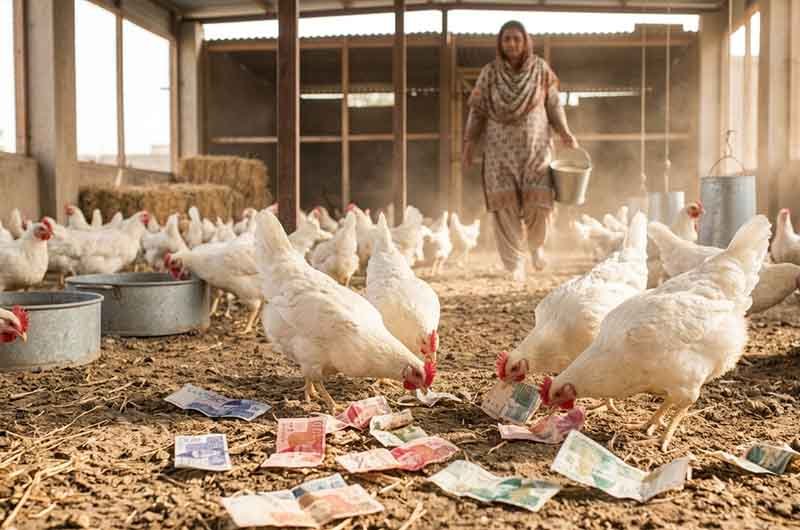
A prolonged closure of the Afghan border has plunged Pakistan’s poultry industry into its worst economic crisis to date, surpassing even the damage caused by the bird flu outbreak two decades ago. The shutdown—in place since October last year—has blocked export routes that previously absorbed nearly 20% of domestic poultry production.
The loss of the Afghan market, combined with supply disruptions to Kashmir and Balochistan and weak domestic demand, has created a severe supply glut across the country.
Financial Impact on Producers
- Chicken Selling Price: Farms face a production cost of Rs 290/kg but are forced to sell at Rs 250/kg, incurring a direct loss of Rs 40/kg.
- Chick Sales: Day-old chicks costing Rs 70 to produce are being dumped for just Rs 5, causing a Rs 65 loss per chick.
- Taxation Pressures: Producers must still pay a Rs 10 Federal Excise Duty (FED) per chick despite operating at heavy losses.
- Operational Costs: Escalating diesel and transportation costs are further shrinking producer margins.
Industry leaders, including Pakistan Poultry Association (PPA) Executive Member Imran Khan, are calling on the government to reopen export routes to Afghanistan immediately to clear the 20% surplus and prevent widespread farm bankruptcies.
Industry Responds with Alternative Rate Mechanism In response to market instability, the Sindh-Balochistan Broiler Farmers Alliance convened an emergency strategy meeting with key stakeholders, including Dr. Zafar Islam, Kamal Akhtar Siddiqui, Abdul Ghani Baloch, Mian Sheikh Wali Muhammad, and Imran Khan.
To break free from unfair pricing structures, the Alliance resolved to develop an independent, data-driven rate mechanism based on actual farm production costs and market conditions to safeguard producers’ economic interests.