
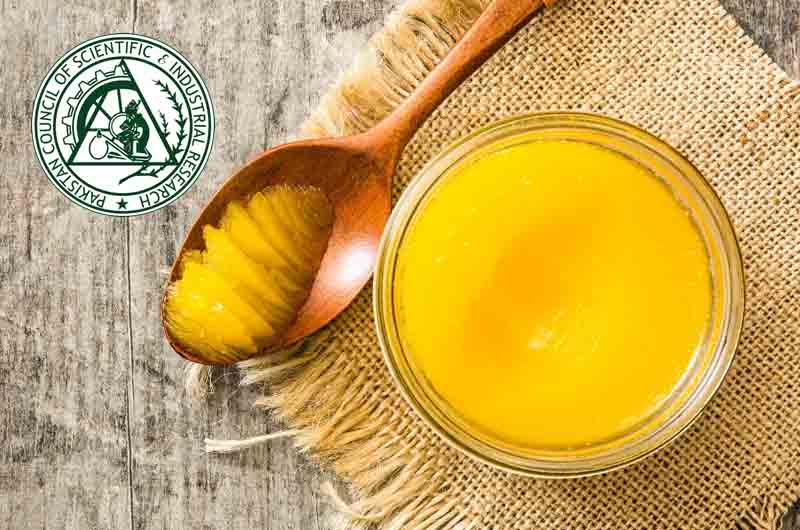
A government report released Friday revealed alarming food safety concerns, showing that approximately 48% of vanaspati ghee, 75% of refined palm oil, and 25% of packaged milk samples tested failed to meet official quality standards. Experts warn these substandard products pose severe health risks, including cardiovascular disease.
The findings were presented during a National Price Monitoring Committee (NPMC) meeting chaired by Federal Minister for Planning Ahsan Iqbal. The quality assessment, ordered by the planning minister, evaluated 491 samples of packaged edible oils, ghee, and milk collected nationwide. Testing was conducted by the Pakistan Council of Scientific and Industrial Research (PCSIR), with final results compiled by the Pakistan Standards and Quality Control Authority (PSQCA).
Out of 491 total samples, 315 met national standards, while 176 failed—resulting in an overall non-conformance rate of roughly 36%.
Key Laboratory Results:
- Vanaspati Ghee: 98 out of 204 samples (48%) failed quality standards.
- Refined Palm Oil: 3 out of 4 samples (75%) failed.
- Powdered Milk: 8 out of 18 samples (44%) failed.
- Blended Cooking Oil: 40 out of 146 samples (27%) failed.
- Packaged Liquid Milk: 26 out of 104 samples (25%) failed.
- Refined Canola Oil: 1 out of 13 samples (8%) failed.
The report highlighted severe nutritional deficits in failed products. One tested milk sample contained just 0.8% fat, falling far short of the mandatory 3.5% minimum. While established multinational brands generally met national standards, smaller local producers accounted for the majority of quality violations.
Government Response and Next Steps
Expressing concern over rising cardiovascular illnesses—particularly among younger populations—Iqbal emphasized that food safety is a matter of national security.
“The objective is not merely to identify deficiencies, but to ensure that every citizen has access to safe, healthy, and quality food that meets national standards,” Iqbal stated, instructing regulatory authorities to tighten enforcement against food adulteration.
To address the findings, the planning minister formed a technical sub-committee of experts from the Planning Ministry, PCSIR, and PSQCA to analyze the lab results and recommend regulatory actions. Additionally, Iqbal ordered provincial and regional administrations to conduct a nationwide survey assessing the quality of unpackaged (loose) milk, ghee, and edible oil, which were not included in the initial testing round.
Economic Briefing and Price Disparities
During the meeting, the Pakistan Bureau of Statistics reported that headline inflation dropped to 9.2% in July 2026. While natural gas, housing, petrol, wheat flour, and fresh milk continued to push living costs up, price drops in sugar, potatoes, and chicken helped moderate overall inflation.
The committee also highlighted significant price gaps between wholesale and retail markets across various cities. District and provincial administrations were directed to investigate these market distortions, eliminate excessive markups, and ensure fair consumer pricing.