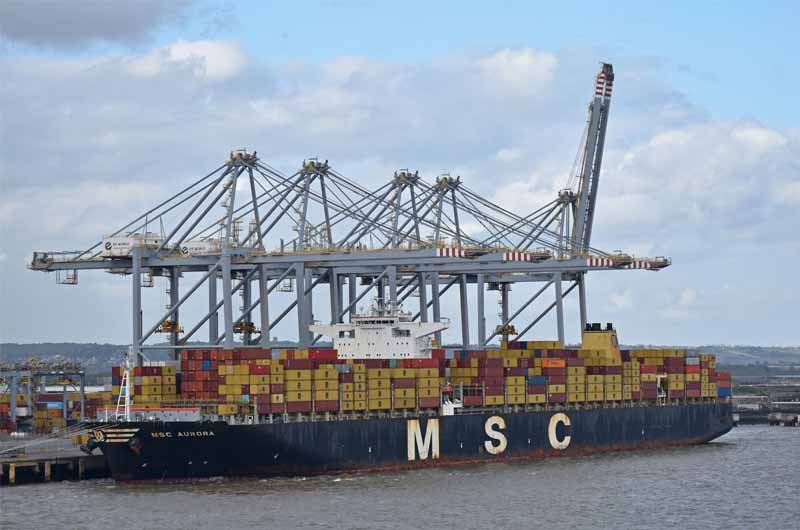
In a major breakthrough for national trade logistics, Pakistan has officially restored a direct weekly shipping service connecting Karachi to seven major European ports, promising faster turnarounds and reduced freight costs for local exporters.
Direct Sea Route to Cut Costs and Transshipment Delays
The Mediterranean Shipping Company (MSC)—one of the world’s largest container shipping operators—has resumed its premium “I-Pak” service. Operating directly out of the Karachi Gateway Terminal Limited (KGTL), the weekly route connects Pakistani cargo straight to European destinations without requiring intermediate transshipment stops.
Federal Minister for Maritime Affairs Muhammad Junaid Anwar Chaudhry hailed the development as a critical milestone for Pakistan’s economic stabilization:
“The restoration of direct European shipping links is a strategic win for our export industry, providing predictable, uninterrupted logistics for our businesses.”
The initiative was facilitated through joint efforts by the Karachi Port Trust (KPT) and KGTL management. KPT Chairman Rear Admiral (r) Shahid Ahmed noted that ongoing modernization efforts aim to integrate Karachi’s port infrastructure more deeply into global trade corridors.
Vital Lifeline for Textile Exporters
The European Union represents one of Pakistan’s largest trading blocks, consuming roughly 29% of total Pakistani exports in 2025 according to Pakistan Business Council data.
| Trade Parameter | Economic Context & Impact |
| Primary Beneficiary | Textile & Garments Sector (represents ~75% of total EU exports) |
| Tariff Advantage | Leverages EU GSP+ status for duty-free/reduced-tariff market access |
| Logistical Impact | Bypasses intermediate ports, cutting transit lead times and delivery risks |
| Trade Goal | Enhances competitive edge against regional market rivals |
By bypassing third-party transshipment hubs, Pakistani exporters gain faster transit times and tighter schedule reliability—enabling textile manufacturers to meet strict order deadlines for European retailers despite ongoing domestic energy and production pressures.