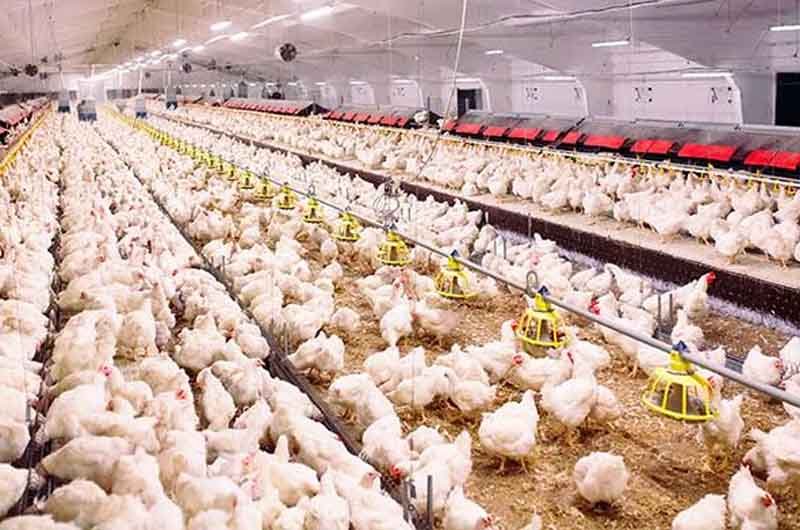
Despite ranking as the world’s 11th-largest poultry producer, Pakistan’s poultry sector continues to lag in international markets, generating just $23–24 million of the country’s total $530 million meat export basket. Speaking at the 26th International Poultry Exhibition, Finance Minister Muhammad Aurangzeb outlined a strategic vision to propel the country into the top global ranks by addressing systemic supply chain and biosecurity bottlenecks.
Overcoming Structural Hurdles for Export Growth
Addressing attendees as the chief guest at the Expo Centre, Aurangzeb emphasized that while domestic production capacity is substantial, breaking into the world’s top 10—and eventually top 5—poultry producers requires urgent structural reforms across the value chain.
Key priority areas identified by the minister include:
- Disease Management: Upgrading biosecurity and veterinary standards to meet strict international sanitary requirements.
- Input Cost Control: Mitigating high feed prices and production costs that hinder global price competitiveness.
- Cold-Chain Logistics: Developing modern processing, storage, and refrigerated transport infrastructure to preserve product quality for long-haul export routes.
Target Markets & Fiscal Reforms
The Finance Ministry highlighted high-value expansion targets across neighboring regions, including the Gulf Cooperation Council (GCC) nations, emerging markets in Central Asia (such as Kazakhstan, Tajikistan, and Uzbekistan), and high-demand markets in Southeast Asia.
| Strategic Focus Area | Impact & Government Strategy |
| Export Target Regions | GCC, Central Asia (Kazakhstan, Tajikistan, Uzbekistan), Southeast Asia |
| Current Export Contribution | ~$23–24M out of $530M total national meat exports |
| Tax Policy Engagement | Budgetary reviews planned to address industry tax concerns |
| Sales Tax Enforcement | Strict crackdowns on tax evasion to redirect recovered funds into growth sectors |
In addition to trade logistics, Aurangzeb addressed taxation, assuring industry leaders that policy concerns would be reviewed ahead of the upcoming federal budget. However, he cautioned that addressing sales tax evasion remains a critical imperative:
“If a business collects sales tax from the consumer but does not pass it on to the treasury, it is difficult to imagine a more serious act of wrongdoing. Revenue recovered by curbing sales tax evasion will, in turn, be deployed to support high-potential sectors like poultry.”