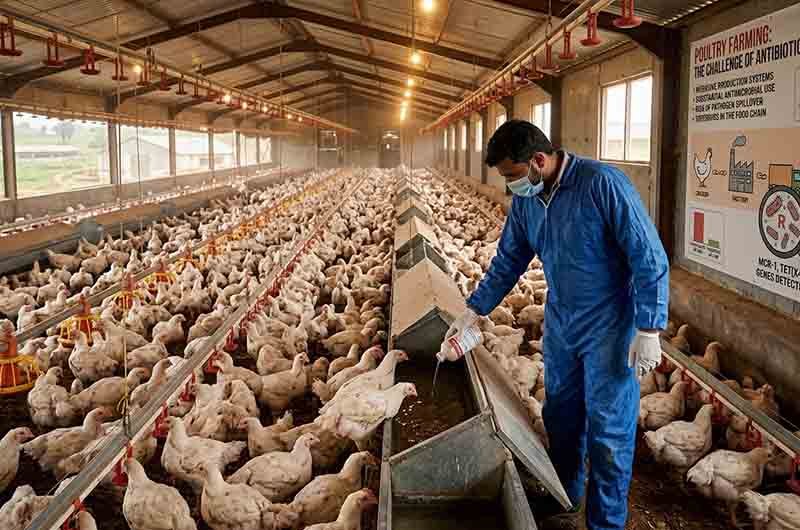
Pakistan’s rapidly expanding poultry sector—now the world’s eleventh-largest and responsible for over 40% of the country’s meat—is facing a critical sanitary turning point. As intensive broiler production surges, excessive reliance on antibiotics is turning chicken houses into dangerous hotspots for antimicrobial resistance (AMR), threatening both public health and global trade.
The Reality on the Ground
Data from commercial farms across Punjab reveals a deep dependence on antimicrobials for routine flock management rather than targeted disease treatment:
- Overuse of Critical Drugs: A 2024 study covering 100 farms revealed that 66% of antibiotic treatments were administered prophylactically (preventatively), often within a chick’s first week. Crucially, 57% of active substances used are classified as critically important for human medicine, including colistin (17%) and enrofloxacin (8%).
- Prescription-Free Usage: A 2023 survey in rural Punjab found that 60% of farmers acquired antibiotics without a veterinary prescription, and 45% used them directly as growth promoters.
- Backyard Flocks Affected: AMR is not confined to commercial operations. A 2023 study on non-commercial backyard chickens found that over 70% of isolated E. coli strains showed resistance to critical drugs like colistin, enrofloxacin, and cefotaxime.
Dissemination Across the Food Chain
Recent genomic research highlights how resistant bacteria move through integrated production systems:
| Stage Tested | Key Findings | Public Health Implication |
| Breeders & Day-Old Chicks | Detection of mcr-1.1 (colistin resistance) and tet(X4) (tigecycline resistance) genes. | Indicates vertical transmission from breeding stock down to young chicks before farm exposure. |
| Broilers & Retail Meat | Clonal transmission of tet(X4) (ST-1011 lineage) preserved through to market. | Exposes consumers to potential foodborne exposure of bacteria carrying high-priority resistance determinants. |
Regulatory Gaps vs. Farm-Level Solutions
While Pakistan’s National Action Plan on AMR and Punjab’s poultry regulations prohibit using critical drugs like colistin as growth promoters, enforcement and nationwide surveillance remain weak.
However, practical farm-level biosecurity shows a clear path forward:
- Biosecurity in Action: Practical interventions—such as vehicle disinfection, citric acid water treatment, and climate-controlled ventilation—have demonstrated that enhanced farm management can cut annual antibiotic spending per bird by up to 25%.
- The Global Stakes: With global AMR projected to cause over 39 million direct deaths by 2050, shifting from continuous antibiotic reliance to preventative biosecurity, targeted vaccination, and strict veterinary oversight is essential to safeguard public health and preserve export markets.