
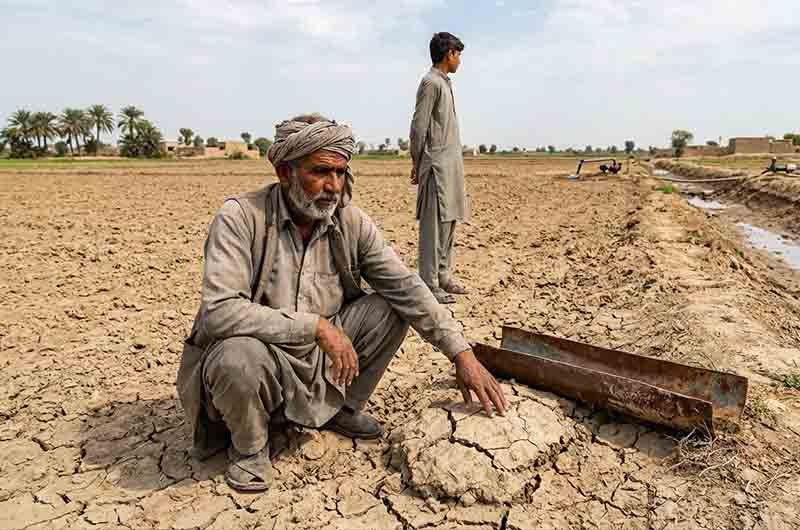
As Pakistan enters the crucial Rabi sowing season, the country’s agricultural sector faces an intensifying crisis marked by shrinking water reserves, rising input costs, and unresolved transboundary water disputes.
Farmers across key agricultural corridors are expressing deep skepticism regarding water availability, certified seed access, and procurement policies. The Indus River System Authority (IRSA) has approved a 22% lower water share for the upcoming season, disproportionately impacting Punjab and Sindh under the 3-tier allocation formula. Combined storage at the Tarbela and Mangla reservoirs has plummeted below 9.5 million acre-feet (MAF)—the lowest level since 2021—falling significantly short of the projected Rabi water demand of 37 to 38 MAF and signaling an estimated 25% overall water deficit.
While the government aims for an ambitious production target of 33 million tons to avoid last year’s shortfall—which forced nearly one to 1.4 million tons of wheat imports—analysts and agricultural bodies warn that bleak irrigation realities may undercut these goals. Compounding these domestic production headwinds is the shadow of the Indus Water Treaty, which remains in abeyance following geopolitical tensions, leaving long-term water security vulnerable despite recent international legal rulings.
For policymakers, agrifood stakeholders, and millions of farming households, bridging the widening gap between ambitious production targets and ground-level resource constraints will require immediate, decisive intervention to safeguard national food security.