
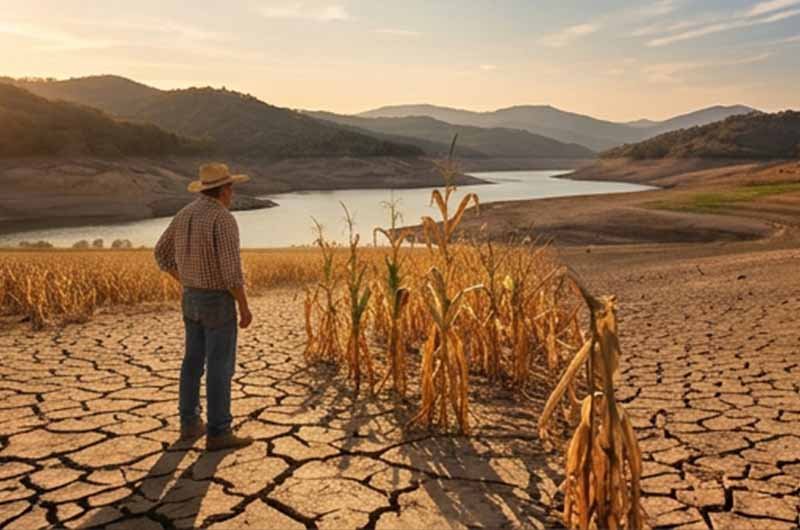
Mexico’s agrifood industry is defined in 2026 by a striking paradox: massive waves of foreign direct investment are modernizing industrial processing facilities, even as severe structural vulnerabilities—such as acute water scarcity and record staple grain imports—threaten primary agricultural production.
While multinational giants like Nestlé pour billions into state-of-the-art manufacturing hubs, distribution centers, and localized producer networks in regions like Veracruz and Guanajuato, domestic corn production continues to lag behind demand. With projected corn imports climbing to a record 24.8 million tons against a domestic output of 23.5 million tons, agribusiness leaders and livestock producers face mounting financial pressures to maintain supply chain stability.
Simultaneously, trade dynamics are undergoing a major realignment. While the United States remains the primary destination for the vast majority of Mexican fruit exports, producers are successfully expanding their global footprint. Strategic initiatives—ranging from agricultural technology partnerships with South Korea to export diversification under the Modernized Global Agreement with the European Union—are opening new pathways for high-value sectors like avocados and berries, all while navigating tightening phytosanitary border protocols.
For supply chain directors and B2B executives, navigating this complex dual-track reality requires balancing aggressive industrial expansion with climate-resilient primary sourcing and rigorous regulatory compliance as Mexico moves toward 2027.