
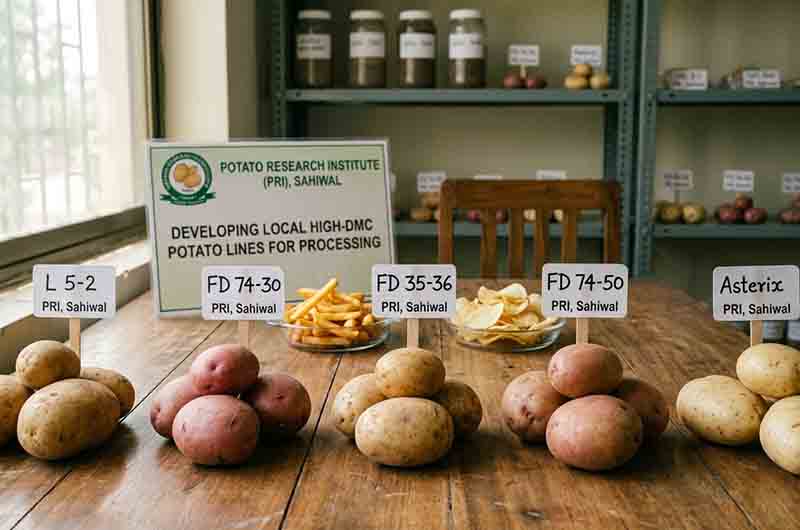
Researchers at the Potato Research Institute (PRI), Sahiwal, have successfully developed four new potato lines tailored for the processing industry. Featuring exceptionally high dry matter content, these new varieties could significantly boost domestic production of potato chips and French fries while paring back Pakistan’s heavy reliance on imported crops.
Key Highlights of the Discovery
- New Lines Developed: The newly bred potato lines—L 5-2, FD 74-30, FD 35-36, and FD 74-50—all boast a dry matter content (DMC) exceeding 22%.
- Target Industry Standard: According to PRI Director Dr. Rana Aftab Iqbal, food processors prefer varieties with over 20% dry matter. Higher solids and lower water content ensure the potatoes absorb less oil during frying, yielding crispier fries and chips.
- Building on Past Success: Founded in 2009, PRI has previously developed 12 table potato varieties, including Punjab, Sadaf, and Ruby (which range between 20% and 22% DMC). These four new lines mark the institute’s highest DMC achievement to date.
Why Local Varieties Matter for Pakistan
Despite producing roughly 10 million tonnes of potatoes annually and ranking among the world’s top producers, Pakistan has struggled to fully capitalize on the lucrative processed-potato sector. Most local harvests consist of table varieties with lower DMC levels, forcing domestic processors to rely heavily on Dutch imports such as Lady Rosetta, Hermes, Alverstone, Venus, Sante, and Asterix.
Advantages of Locally Bred Lines:
- Climate Resilience: Better adapted to Pakistan’s specific environmental challenges, including frost, drought, and extreme heat.
- Reduced Import Costs: Cuts dependence on foreign seed and planting materials.
- Agricultural Flexibility: Complements best farming practices, fertilizer regimens, and optimized harvest timing to maximize yield quality.