

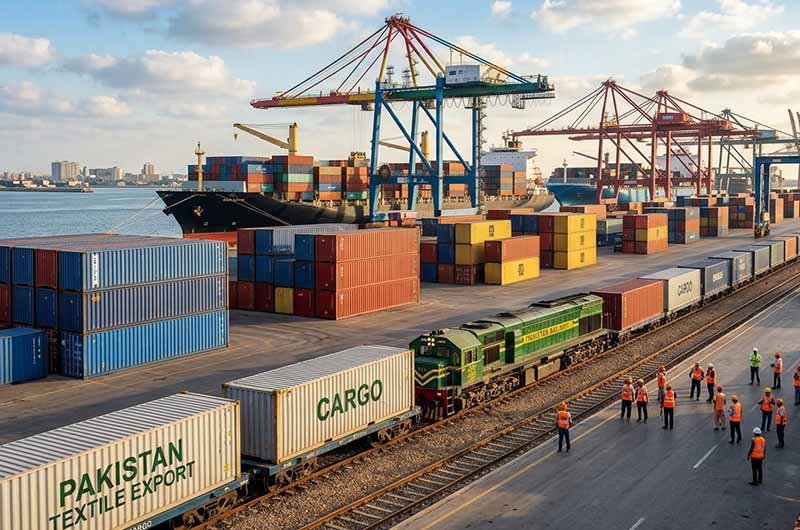
Pakistan’s merchandise exports saw a steady increase during the first four months of the financial year 2026–27 (July–October), climbing 8.52% to reach $11.336 billion, up from $10.446 billion during the same period last year, according to provisional data released by the Pakistan Bureau of Statistics (PBS).
Despite the positive momentum in overseas shipments, a faster rise in imports has widened the country’s overall trade deficit.
Key Financial Highlights (July–October FY27)
- Merchandise Exports: Increased by 8.52% to $11.336 billion (Rs3.146 trillion).
- Merchandise Imports: Grew by 12.59% to $25.964 billion (Rs7.215 trillion).
- Trade Deficit: Widened by 15.97% to $14.628 billion (Rs4.069 trillion), an increase of $2.014 billion compared to the corresponding period last year.
October 2026 Performance Breakdown
On a monthly basis, export growth continued at a modest pace while imports experienced a sharper upward trend:
- Year-on-Year (YoY): October exports rose 2.84% to $2.929 billion (compared to $2.848 billion in October 2025). Meanwhile, imports jumped 11.81% to $6.806 billion, pushing the monthly trade deficit up by 19.70% to $3.877 billion.
- Month-on-Month (MoM): Exports edged up slightly by 0.21% from September ($2.923 billion), while imports increased by 5.72% from $6.438 billion, expanding the monthly trade deficit by 10.30%.
Government Initiatives & Economic Strategy
The rise in export earnings coincides with the government’s ongoing push for export-led economic growth. Prime Minister Shehbaz Sharif has held regular consultations with industrialists, exporters, and business leaders to tackle sector-specific hurdles and enhance international competitiveness.
The FY2026-27 federal budget introduced several support mechanisms for businesses, including:
- Reductions in select taxes and surcharges.
- Accelerated tax refunds.
- Enhanced utilization of the Export Development Fund.
- Concessional export financing and greater financial backing for small and medium-sized enterprises (SMEs).
Challenges Ahead
While government coordination and fiscal measures aim to spur private-sector-led growth, analysts point out that imports continue to outpace exports, widening the trade deficit. Economists emphasize that sustaining long-term export growth will depend heavily on ensuring competitive production and energy costs, maintaining policy consistency, facilitating financing, and expanding access to global markets.